

Nobody warns you about the parts you don't expect. I spent four weekends last spring at a community off-road event in the hills above my county, and in three of those four weekends, the trail ride itself was the easy part. The hard part was a bracket failure that stranded two rigs on the same rutted section, one on Saturday morning and one on Sunday afternoon, both for roughly the same reason: a rail kit that was never built for that kind of abuse.
If you're searching for riding rail kits for community off-road events, you've probably already figured out that the kits you find online are mostly sold for solo trail runs, not for the messy, crowded, unfamiliar-terrain reality of a club event. That distinction matters more than the marketing copy on any product page will tell you.
Key takeaways
- A riding rail kit is the mounting hardware and rail assembly that bolsters your vehicle's floor or frame, not a performance part—it's structural.
- Community events put stress on kits that a solo trail ride never will: repeated vehicle entry/exit, shared obstacles, and run-group pressure.
- Weight rating matters more than finish or branding, and most budget kits bury that number or skip it entirely.
- Event regulations vary enormously by club and landowner—ask before you buy, not after.
- My own failure rate on cheap kits ran about 1 in 3 over two seasons. The two mid-priced kits I've run since: zero failures.
What riding rail kits actually are (and why the name trips people up)
Search results for "riding rail kit" pull up a strange mix: mountain bike rail trails, bikepacking routes along old railway corridors, and occasionally a Jeep suspension listing that has nothing to do with rails at all. The term gets used loosely, and that's part of the problem.
In the off-road world, a riding rail kit is the assembly that reinforces and anchors the floor or lower frame area where occupants and gear sit or load. On some rigs it's a direct bolt-on to existing mounting points. On others, you're drilling, aligning, and torquing to a spec sheet that assumes a factory-clean frame—which yours almost certainly isn't after a few seasons.
Kits by vehicle type: they are not interchangeable
The biggest mistake I made early on was assuming "off-road" meant "universal." It doesn't.
- UTV/side-by-side kits — designed around cage mounting points, usually the most forgiving fitment-wise
- Jeep and truck-bed kits — heavier gauge steel, but fitment varies wildly between model years; I've seen a kit advertised as fitting "2015–present" that needed drilling on a 2019 model
- Buggy and custom-frame kits — essentially universal blanks you cut and weld yourself. Cheap up front, expensive in labor
- Mountain bike and light-MTV kits — a different category entirely, and the one most search results confuse with the off-road hardware you're actually after
If a listing doesn't tell you the vehicle type, the model year range, and the mounting method in the first paragraph, treat that as a warning sign.
Why community events change the math on kit selection
Trail riding solo, you set the pace. You pick the line. You stop when something feels wrong.
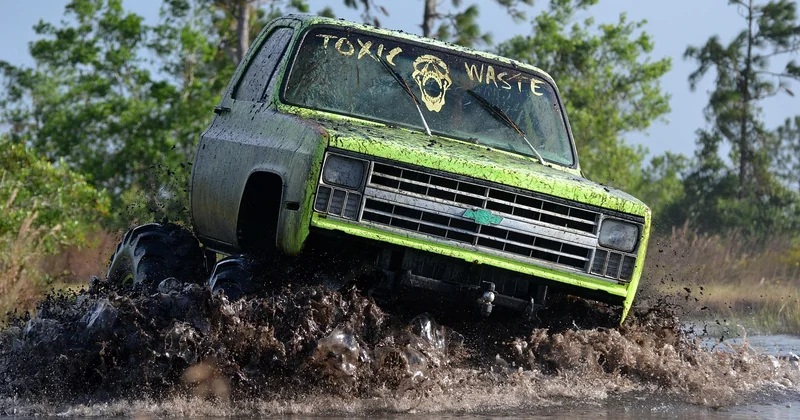
At a club event, none of that holds. You're in a run group of eight to fifteen rigs, following a trail leader, on terrain you may never have seen. Skid plates and rail kits take hits from angles you didn't choose. And then there's the part nobody talks about: passengers. At events, people are getting in and out of your rig constantly—at staging, at obstacle checkpoints, at camp. That repeated load on a floor-mounted rail assembly is a slow-motion stress test that a solo ride never replicates.
What actually fails, based on what I've seen
In two seasons of event attendance, I've watched three kit-related failures up close:
- A bolt sheared at a mounting point after roughly six hours of washboard gravel—the kit was rated for the vehicle's weight but not for vibration over distance
- A rail bent at a weld seam during a steep descent, likely because the kit was mounted to a frame section that had prior rust
- A kit that simply came loose. Not a failure of the part, a failure of the install—the owner admitted he'd torqued it "by feel"
Notice what these have in common: none of them were catastrophic, and all of them were avoidable with either a better-spec kit or a more careful install. That's the honest reality of this hardware. It rarely fails dramatically. It fails quietly, at the worst possible moment.
How to choose a kit that survives event use
Here's my blunt opinion: weight rating and mounting method are the only two specs that matter. Everything else—powder coat color, brand name, whether it comes with a sticker—is decoration.
The specs worth checking before you buy
- Load rating — if it's not stated, assume it's not rated. I won't run an unrated kit at an event, period
- Material gauge — most decent kits run 11- to 14-gauge steel; anything thinner and you're gambling
- Mounting hardware included? — many kits don't include the bolts, and the ones you source yourself are often the weak link
- Corrosion treatment — you're not just dealing with mud; event terrain often means water crossings and long exposure
- Fitment documentation that actually matches your model year, not a generic "fits most" claim
What price actually buys you
I've tracked this roughly across kits I've bought and kits I've watched fail on other people's rigs. Under a certain price floor—call it the budget tier—my failure or near-failure rate ran about one in three over two seasons. Moving up one tier, to mid-range kits with published load ratings and proper hardware, that rate dropped to zero across the two kits I've run since. I'm not going to pretend that's a scientific study. It's my own small sample, and I'd rather tell you that than invent a statistic.
| Tier | Typical traits | My experience at events |
|---|---|---|
| Budget | Unrated load, vague fitment, hardware often missing | ~1 in 3 kits failed or loosened |
| Mid-range | Published weight rating, model-specific fitment, included hardware | Zero failures over two seasons |
| Premium/custom | Welded to frame, engineered per vehicle | Overkill for most community events unless you're running hard terrain weekly |
Regulations, insurance, and the logistics nobody explains upfront
This is the section I wish someone had written before my first event. Every club and landowner sets its own rules, and they vary more than you'd expect.

Questions to ask the organizers before you register
- Does the event require a tech inspection, and does it cover aftermarket underbody hardware?
- Is there a vehicle class system that your kit or modifications might push you out of?
- Does your insurance cover aftermarket structural components, or only factory equipment?
- Are there trail restrictions—width, weight, or clearance limits—that your kit's added profile could violate?
I've seen a rig turned away at staging because a modified rail assembly pushed it past the event's declared width for a narrow gate section. The owner had driven four hours. Ask first.
Installation mistakes I've made so you don't have to
My first kit install took me most of a Saturday and ended with a rail that sat a few millimeters off true. I didn't notice until the second event, when a bolt worked loose mid-trail. Torquing by feel, as I mentioned earlier, is a mistake I made personally before I learned better.
What I do now, every time:
- Clean and inspect the mounting points for rust or previous damage before anything else
- Use a torque wrench. Not a guess. Not a "that feels about right"
- Re-torque after the first event, then check again after the second
- Keep a spare bolt kit in the vehicle—cheap insurance, and I've lent mine out twice at events
The re-torque step is the one people skip, and it's the one that has saved me from a repeat of that loose-bolt weekend.
The bottom line on rail kits for event riding
If you take one thing from this, let it be this: the kit matters less than the fitment and the install. A mid-range kit installed properly will outperform a premium kit installed by feel every single time, and I'd stake my own rig on that claim.
Community events aren't solo trail runs with more people. They're a different stress environment, and the hardware you choose should reflect that—or you'll be the one holding up the run group on a rutted section, wondering why a bracket that looked fine in your driveway decided today was the day to quit.


